Packaging efficiency solutions Australia is becoming critical as manufacturers balance rising fulfilment volumes with strict sustainability and compliance requirements.
At the same time, increasing operational output while reducing material consumption is no longer optional. Instead, it has become the cornerstone of a compliant and resilient Australian supply chain.
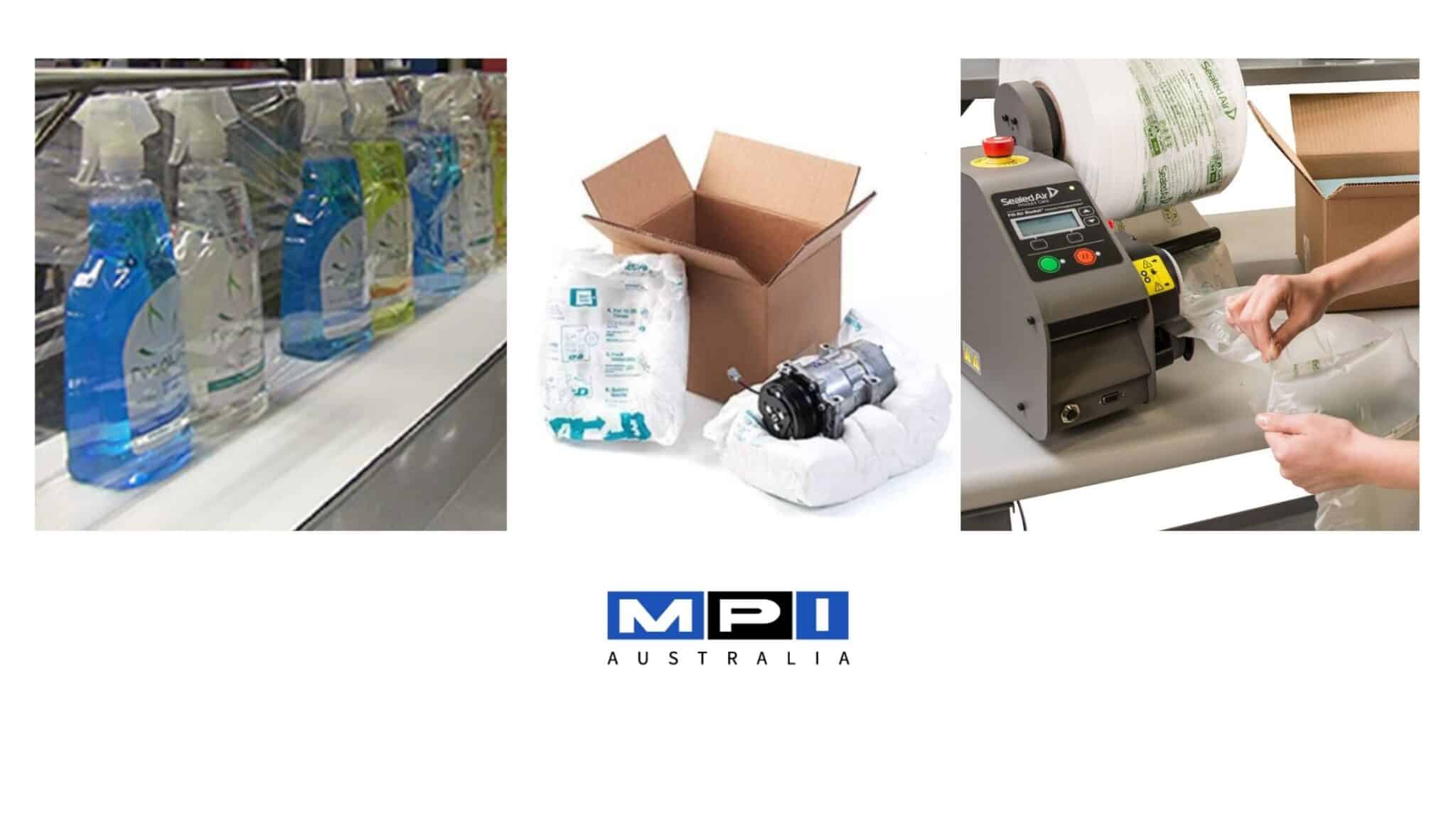
In this context, this article explores how two innovative Sealed Air technologies—Cryovac® CT Microlayer Shrink Films and Instapak®/Fill-Air® On-Demand Protection Systems—deliver this crucial balance. Together, they transform both end-of-line wrapping and in-the-box fulfilment for MPI Australia’s partners.
The Australian Mandate & the Road Ahead
Australia’s packaging industry is undergoing a systemic shift. Importantly, ambitious national goals now apply to all packaging made, used, and sold across the country.
Key National Packaging Goals
To achieve a true circular economy, Australia has defined several clear objectives. As a result, these goals now guide design and procurement decisions:
-
100% of packaging to be reusable, recyclable, or compostable
-
Plastic recycling rates targeted to increase to 55% by 2030, acknowledging the complexity of Australia’s waste infrastructure
-
50% average recycled content included in new packaging
-
The phase-out of problematic and unnecessary single-use plastic packaging
Looking Ahead: The Regulatory Horizon
The direction of travel is clear. In practice, Australia is moving toward a tighter regulatory environment with mandatory compliance.
-
Mandatory regulations (post-2025): National packaging requirements and new Packaging Stewardship Regulations are expected around 2026. Consequently, today’s voluntary goals will become legal obligations.
-
Extended Producer Responsibility (EPR): Reformed regulations will shift greater financial and logistical responsibility onto businesses that produce and sell packaged goods.
-
Design for recyclability: Tools such as the Packaging Recyclability Evaluation Portal (PREP) and the Australasian Recycling Label (ARL) help businesses verify claims and meet Australia’s highest recyclability standards.
Cryovac® CT Films – The Revolution of Shrink
For heavy-duty end-of-line wrapping, relying on thicker films to increase protection is both costly and unsustainable. Instead, the Cryovac® CT Series represents a major advance in material science.
By using patented Microlayer technology, these films maintain strength while significantly reducing material mass.
Technical Deep Dive: Patented Microlayer Technology
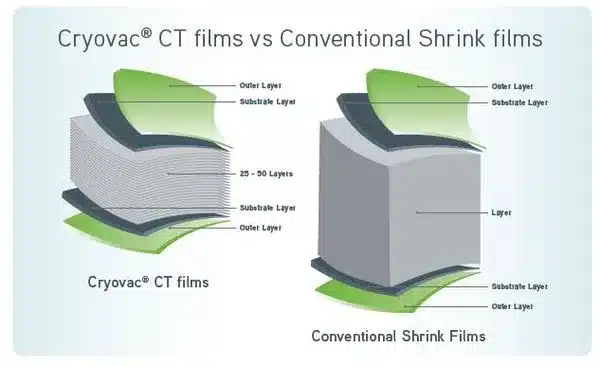
The CT Series uses up to 50 discrete micro-layers. This revolutionary “plywood effect” construction delivers far greater strength than conventional shrink films, which typically contain only one to five layers.
As a result, the film offers superior tear resistance and seal integrity, even when compared with much thicker traditional materials.